Commercial openings only — storefront, hollow metal, closers, exit devices, automatic Service line (333) 333 333
Charlotte Commercial Door Repair logo
The people behind the work

About Charlotte Commercial Door Repair

Questions about how we work or what we charge?

The shape of the business

A small crew, deliberately, doing one category of work properly

Charlotte Commercial Door Repair is a commercial door and hardware contractor working across Mecklenburg County and the towns around it. The scope is narrow on purpose: pedestrian openings on commercial buildings. Storefront entries, hollow metal, wood commercial doors, the hardware hung on them, and the automatic operators that move some of them.

That narrowness is the whole point. A crew that also chases gutters and HVAC does not develop an eye for a frame that is three-sixteenths out of square, and that eye is what separates a repair that holds from a repair that comes back in five weeks.

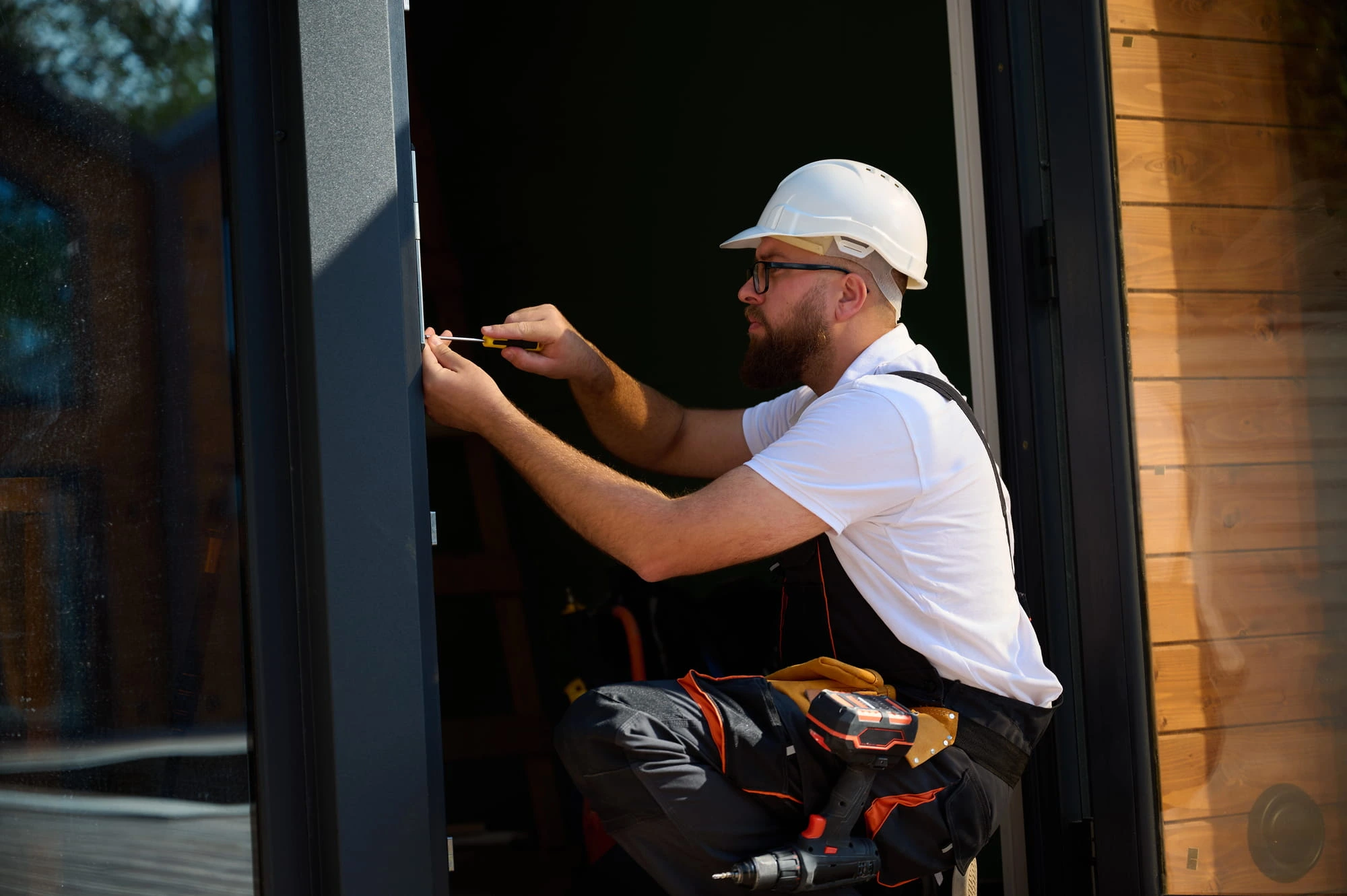
Commercial door technician adjusting the upper hinge on an aluminium and glass entrance in Charlotte, NC
Origin

How this started

Curtis Bledsoe came into the trade sideways. A summer job carrying glass for a storefront crew turned into an apprenticeship, which turned into eleven years of hanging and servicing commercial openings for other people's companies around Charlotte.

The job that finally decided things was a strip center off Independence Boulevard. Six tenants, six aluminum entries, and a work order to replace all six door closers because the doors were slamming. Curtis measured first. Four of the six had closers that were fine and frames that had settled; two needed a rebuild. The customer was quoted for six and billed for two, and the property manager who noticed that difference is still a client.

Charlotte Commercial Door Repair opened with one van, a laser level, and a policy of writing down every finding whether or not it produced revenue that day. The finding sheet has stayed the core of the business since.

Growth has been slower than it could have been. Turning down overhead door work, dock levellers, and general handyman requests costs money in the short term. It also means that when somebody calls about a storefront door dragging on the threshold, they get a technician who has fixed that exact failure several hundred times.

The crew is four people today, covering the metro from Huntersville down to Fort Mill. It will grow when there is somebody worth hiring, and not to hit a number.

Method

How we approach an opening

Every visit starts with the same short sequence: look at the door closed, look at it open, watch it move under its own hardware, then measure. Reveal gaps top and sides, plumb on both jambs, the diagonal, floor condition at the threshold. Five minutes with a tape and a level answers most of the questions that a parts catalogue cannot.

Only then does the hardware get inspected, because hardware failure is so often a symptom. A latch that misses its strike, a closer that cannot pull a door home, a pivot that has gone oval — all three read as hardware problems and all three are frequently geometry problems.

The findings get written down in full, including things you did not call about and things we are not proposing to fix yet. A hinge screw backing out of a soft jamb is worth knowing about six months before it tears out.

Then you get options, plainly ranked: what is required now for safety, security, or code compliance; what is worth doing while the technician is already on site; and what can be deferred to a budget cycle. Nothing gets ordered before you have picked.

Standards

What we hold ourselves to

  • 01

    Measure before recommending

    A recommendation without measurements is a guess with an invoice attached. The numbers go on the finding sheet and the finding sheet goes to you.

  • 02

    The cheaper honest option gets said out loud first

    If an adjustment solves it, that is what you hear about, even on a visit that was booked as a replacement.

  • 03

    Never fake a rating

    Fire door assemblies and egress hardware either comply or they do not. We will not make an assembly look serviced when the repair would break its listing.

  • 04

    Approval before scope changes

    If a technician opens a frame and finds worse than expected, the phone comes out before the drill does.

  • 05

    Leave the site cleaner than the door

    Metal filings, packaging, and old hardware go with us. Businesses that trade the next morning should not be sweeping up after a contractor.

The people

The Crew

Curtis Bledsoe

Owner and Door Systems Technician

Curtis started as a glazier's helper on aluminum storefront systems and moved into hollow metal and fire door work before going out on his own. He handles surveys, the awkward diagnostic jobs, and anything involving a frame that has moved. His standing rule on site is that nobody quotes a replacement until somebody has put a level on the jamb and written down the number. Outside work he restores small engines badly and cooks well.

Renata Iglesias

Service Coordinator

Renata spent six years in facilities coordination for a regional retail group before coming over, which means she has sat on the other side of this exact phone call. She scopes incoming service requests, chases the details technicians actually need, handles PO references and vendor onboarding portals, and tells you honestly when a window is going to slip. If your building has a landlord approval process, she has probably already read it.

Marcus Dill

Automatic Door Technician

Marcus works the automatic openings — sliders, swing operators, low-energy units on accessible entrances — and carries the safety-inspection side of that work. He came from commercial electrical and still troubleshoots like an electrician, which is exactly the temperament an operator fault needs. He is the crew member most likely to find that the sensor everyone blamed was fine and the header wiring was chafed.

Hollis Trapp

Hardware and Fire Door Specialist

Hollis handles exit devices, closers, mortise and cylindrical locksets, and the fire door assemblies that carry documentation obligations. Twenty-odd years across institutional and healthcare buildings gave him an unusually literal relationship with listings and labels: if a repair would compromise a rating, he will not do it, and he will explain why in a way that survives an inspector's questions.

Coverage

The ground we cover, and how far it stretches

Charlotte is the centre of the routing. Uptown and South End see the most storefront and office work, University City and the I-85 corridor bring the industrial and hollow metal calls, and the southern suburbs generate a steady flow of retail and medical suite work.

Beyond the city line, regular runs cover Huntersville and Concord to the north, Harrisburg to the northeast, Matthews and Indian Trail along US 74, and Fort Mill across the South Carolina line. Coverage outside that ring is possible for portfolio accounts and gets discussed rather than guessed at.

Travel time is quoted from real conditions, not from a mapping app's optimism. I-77 through the Uptown interchange and US 74 in the afternoon both do unhelpful things to arrival windows, and pretending otherwise just makes people angry.

Answers

Questions about how we operate

Are you licensed and insured?

Yes, and the certificate of insurance goes to your facilities team or landlord on request before the first visit. Vendor onboarding paperwork is routine here rather than a special favour.

Do you take on multi-site accounts?

Yes. Portfolio work is surveyed opening by opening and reported as one prioritized document, so a regional manager can see the whole picture and fund it in order of severity.

Who actually shows up?

One of four named technicians, assigned by the type of opening rather than by whoever is nearest. You are told the name before the visit.

Do you subcontract the work out?

The door and hardware work is ours. Glass replacement, electrical supply to a new operator, and structural masonry get referred to trades that do those things properly, and we say so up front rather than marking up someone else's invoice.

Can we set up recurring maintenance?

Yes, and for buildings with fire door assemblies or automatic operators it is worth doing, since both carry annual inspection expectations. Scheduled visits also tend to catch alignment drift before it becomes a broken part.

What areas do you not cover?

Residential doors, garage and rolling steel doors, dock equipment, and automatic gates all sit outside our scope. Asking is free and the referral will be honest.

Describe the opening. We will tell you what it needs.

Want to talk through a building, a portfolio, or a single stubborn door? Start with a conversation.

Service line (333) 333 333

No charge to ask. You will speak to a coordinator, not a call centre.

Call (333) 333 333