
Storefront Door Repair in Charlotte, NC
Aluminum entrance repair for Charlotte retail and office buildings: doors that will not latch or secure, worn pivots and thresholds, and frames racked out of square. The geometry gets measured before any hardware is quoted.
Tell us how the door is failing and what it looked like a month ago.
Aluminum entries fail slowly, then all at once
The aluminum and glass entrance on the front of most Charlotte retail and office buildings is a light assembly asked to do heavy work. Thousands of cycles a week, wind load off a parking lot, temperature swings that expand and contract the stiles, and a closer pulling on the top corner every single time. Nothing about that is dramatic on any given day, which is exactly why the failure looks sudden when it finally arrives.
What people notice first is usually the latch. The door stops catching, staff start pulling it shut with a hip, and eventually it will not secure at close.
Underneath that symptom, the cause is nearly always geometry. The door has dropped a few millimetres at the lock stile because the bottom pivot or intermediate pivot has worn, or the frame has racked out of square, or the threshold has worn a channel that lets the door sit low.
That is why a new lock almost never fixes a storefront door. Restore the geometry, and the original hardware usually starts working again.
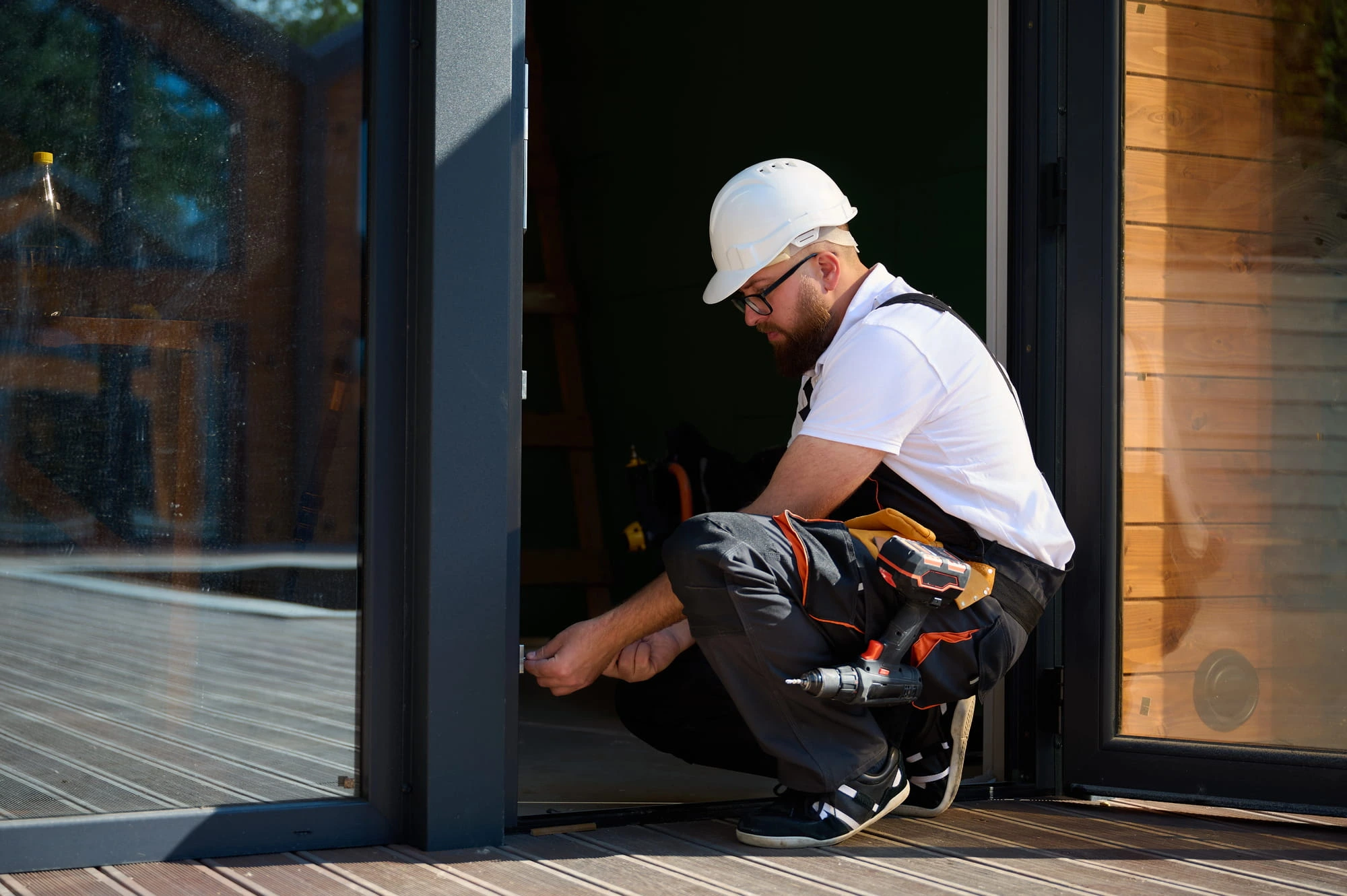
What an aluminum entry is telling you
The failures below are the ones this line of work actually turns up. Open the one that matches and you will get the likely cause and whether it usually resolves as an adjustment.
Will not latch
The door has dropped a few millimetres at the lock stile. Usually a worn bottom or intermediate pivot, a frame racked out of square, or a threshold worn into a channel that lets the door sit low. The latch missing its keeper is a consequence far more often than a cause.
TypicallyAlignment work with hardware attached — pivot service and strike realignment. A new lock almost never fixes a storefront door.
Storefront Door RepairWill not secure at close
The same geometry as a door that will not latch, one stage further on. Staff start pulling it shut with a hip, and eventually it will not secure at all.
TypicallyPivot service and strike realignment, with the reveal and plumb measured before any part is named.
Same-day priority. The building is exposed until this is resolved.
Storefront Door RepairDrags on the floor or threshold
Worn thresholds let doors drop, let weather in, and grind the bottom rail. Top and bottom pivots carry the entire weight of the door and wear predictably, so the drop is usually pivot wear, threshold wear, or both.
TypicallyParts plus labour. Threshold or pivot replacement, then the door height reset against a sound reference.
Storefront Door RepairSlams
A closer that lost fluid, or an adjustment screw somebody turned with a screwdriver. Sweep speed and latch speed are separate stages of the same unit and they are not interchangeable.
TypicallyOften four valve turns. Replacement only where the unit is leaking or seized, or was undersized for the door in the first place.
Door Closer RepairHeavy to pull, or sticks
Most heavy-feeling doors are heavy because a closer is over-tightened or a seal is dragging. On an exposed parking-lot elevation the spring is often cranked tight to stop wind catching the door, which pushes opening force up and wears the hardware early.
TypicallyAdjustment, measured with a gauge rather than judged by feel.
Door Closer RepairWill not open, or binds in the frame
A door bound in a racked frame. Frames move as buildings settle, as loading dock traffic knocks them, and as parking-lot cars find them.
TypicallyQuoted after measurement — how far out it is, what is anchoring it, and whether the glazing is at risk during correction.
Storefront Door RepairPush bar sticks or will not release
A seized mechanism, a door bound in a racked frame, or a vertical rod out of adjustment. All three present identically to the person pushing the bar.
TypicallyDevice and door assessed together, because binding doors cause device faults constantly.
Front of the schedule. A device that will not release under a single motion is the one repair on this site that should not wait.
Exit Device RepairThis asks nothing about you and sends nothing anywhere. If your opening is not described here, say so on the call.
Storefront work we take on
Aluminum entrance repair is mostly precision alignment work with hardware attached. The pattern of failure is consistent enough across Charlotte's retail stock that most visits are diagnosis and correction rather than wholesale replacement.
- 01
Doors that will not latch or secure
The most common call we take. Diagnosed by measuring reveal and plumb before touching hardware, because the latch missing its keeper is a consequence far more often than a cause. Correction is usually pivot service and strike realignment.
- 02
Pivot and hinge replacement
Top and bottom pivots carry the entire weight of the door and wear predictably. Replacement includes resetting the door height and checking that the new pivot has not simply been asked to compensate for a frame problem underneath it.
- 03
Racked and out-of-square frames
Frames move as buildings settle, as loading dock traffic knocks them, and as parking-lot cars find them. Squaring a storefront frame is deliberate, incremental work — done properly it saves the glass, the door, and the hardware all at once.
- 04
Threshold and sweep replacement
Worn thresholds let doors drop, let weather in, and grind the bottom rail. Replacement restores the height reference the whole assembly depends on, and gets sealed properly rather than just screwed down over the old caulk.
- 05
Stile and rail repair
Torn-out screw holes at the lock stile, loose corner joinery, and rails that have separated from tie rods. Some of this is genuinely repairable with re-tapping and re-tensioning; some of it is honest end of life, and you will be told which.
- 06
Cylinder, lock, and hook bolt service
Deadlatches, hook bolts, and mortise cylinders on aluminum stiles, including matching an existing keyway across a multi-tenant building so one key still runs the property.
What drives a storefront repair figure
| Repair | How it is priced | What moves it |
|---|---|---|
| Alignment and latch correction | Labor against the survey | Frame condition, door weight, access |
| Pivot replacement | Parts plus labor per leaf | Pivot type, door weight, floor condition |
| Frame squaring | Quoted after measurement | How far out, what is anchoring it, glass risk |
| Threshold replacement | Parts plus labor per opening | Width, sill condition, sealing requirements |
| Lock or hook bolt work | Per device | Hardware family, keying, stile prep |
Storefront figures move most on two things: whether glass has to be removed to do the work safely, and whether the frame is sound. A well-anchored frame with a worn pivot is a straightforward visit. A racked frame in a settling building is a different conversation, and you will hear the difference before anything is ordered.
How a storefront visit runs
Describe the failure
Door type, what it stopped doing, when it started, and whether the building can currently be secured at close.
Survey the opening
Measurements at the jambs, the reveal, and the threshold, plus a check of pivot wear and closer condition before any part is named.
Written findings
What was found, what is causing what, and which items are safety or security issues versus deferrable wear.
Agree the scope
Options ranked by necessity with a firm figure, approved by whoever holds authority before work starts.
Correct and verify
Latching, closing speed, and secure operation all tested with you present, then the door cycled repeatedly to confirm it holds.
What you get on a storefront door repair visit
Geometry first, hardware second
Reveal, plumb, and diagonal get measured and written down before a single part is quoted. That order is why these repairs hold.
Glass treated as a liability, not an obstacle
Storefront glass is expensive and unforgiving. Frame work gets sequenced to keep load off the glazing rather than hoping it survives.
Building-wide keying kept intact
In multi-tenant buildings, matching the existing keyway keeps one key useful across the property. Breaking that is a decision, not an accident.
Trading hours respected
Cutting and drilling on a shopfront entrance gets scheduled around opening where the site allows, because customers do not walk past an angle grinder to get in.
Other openings we service
Most buildings need more than one of these. Anything outside the five, we will tell you plainly whether it is ours to fix or someone else’s.
Door Closer Repair
Doors that slam, drift, stick open, or leak fluid — adjusted, rebuilt, or replaced with the correct size for the opening.
Learn moreExit Device Repair
Panic bars and exit hardware that stick, fail to retract, or no longer secure — serviced with the egress obligation kept intact.
Learn moreAutomatic Door Repair
Sliders, swing operators, and low-energy accessible entrances — fault diagnosis, sensor work, and annual safety inspection.
Learn moreHollow Metal Door and Frame Repair
Steel doors and frames that have rusted, been forced, or dropped out of square — straightened, re-anchored, or replaced.
Learn moreStorefront Door Repair across the metro
- Commercial door repair in Concord
- Commercial door repair in Huntersville
- Commercial door repair in Indian Trail
- Commercial door repair in Fort Mill
- Commercial door repair in Matthews
- Commercial door repair in Harrisburg
Storefront work is one of five lines; the rest sit under commercial door repair across Charlotte.